 (1)__largepreview__.webp)
The 2026 Mere Anglicanism Conference
Gospel Identity vs. Expressive Individualism: The Difference Between “Come As You Are” and “Stay As You Are” and the Importance of Christian Community
Time after time, the Mere Anglicanism Conference has addressed societal issues of extreme importance, but the 2026 theme, “You Are Not Your Own: Gospel Identity in an Age of Expressive Individualism,” could be the most urgent to date. This year’s speakers were called on to help us understand how we got here––to this point in history that has us looking to ourselves rather than toward God for answers––and to equip us, both clergy and lay people alike, to spread the Gospel in a culture that may be reluctant to hear it.
The Rev. Dr. Carl Trueman: “Where Does It End? Expressive Individualism’s ‘Brave New World’”
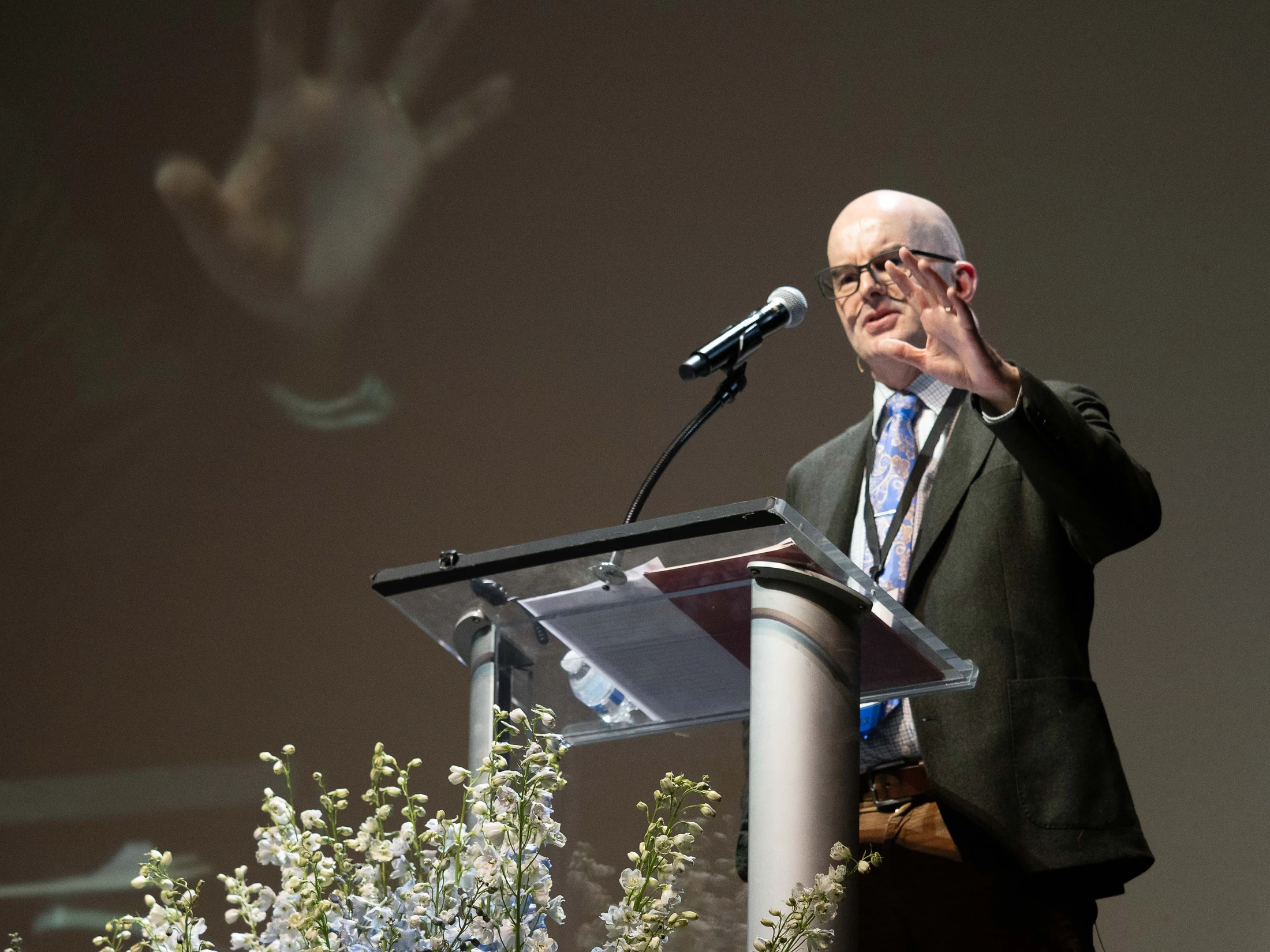
Following the opening Choral Evensong service at St. Philip’s Church on Thursday, January 22, the Rev. Dr. Carl Trueman was the first of seven speakers to take the podium at the Charleston Music Hall. Trueman, a British theologian and author with degrees from Cambridge and the University of Aberdeen, offered both a wakeup call and seeds of hope for our future.
First, what is expressive individualism? “It’s the idea that the thing that really constitutes us, that makes us significant, that grants us a feeling of value,” explained Trueman, “are the feelings we have inside and our ability to express them and be respected for them or accepted for them by the world at large.” While this may seem somewhat innocuous, Trueman pointed out that it’s a dramatic shift in thinking from just 50 years ago, when terms such as “job satisfaction” were unheard of. Rather than relating to one’s own psychological satisfaction, “job satisfaction” in those days would have related entirely to how one’s job allowed oneself to fulfill obligations to other people, to “bring home the bacon.”
Part of this shift from the teleological is related to what Trueman referred to as the “crumbling of external authority.” Over time, the purpose-driven life came to be seen as oppressive, and we are now living in “choose your own destiny” times, when any bit of external pressure to change oneself in any way––to dress more modestly or to curb foul language, for example––is seen as a threat to one’s authenticity.
How does the tape play out then? It’s a difficult question because the goalpost keeps moving: once one issue stabilizes, another comes along. But essential to limiting the destruction of our society is the rebuilding of our understanding of what it means to be human as made in the image of God, to recapture embodiment, recapture friendship, and recapture rituals––and that happens in the church. We cannot simply legislate this problem away. “The real recapturing of humanity, the real thing that will place limits on the insanity of the world around us, are the communities of faithful Christian believers who take humanity seriously,” said Trueman. This focus on community was the common thread that was woven through the conference.
Albert Mohler Jr.: How Did We Get Here? Tracing the Development and Embrace of the Tenets of Expressive Individualism in Western Culture.”
The next morning, Southern Baptist Theological Seminary President Albert Mohler Jr., who endeared himself to the audience by sharing that while he’s Baptist by theology, he’s “Anglican by taste” (a term happily adopted by some of the speakers who followed), delved further into the rise of expressive individualism and “the stunning situation in which we now find ourselves.”
Mohler compressed a college-level modern philosophy course into one sitting while pointing to the Enlightenment and the turn towards the subject as the catalyst. Back that up with Marx and the rise of critical theory and Freud’s push towards therapy, and all of a sudden it’s the 1980s and 90s and the American academic world is exhausted and primed for the next big idea. Forty years later, instead of deconstructing texts, we’re deconstructing boy and girl.
We as Christians have our work cut out for us, which Mohler outlined in a rapid-fire homework assignment with twelve points at the end of his lecture. Among our instructions is to embrace the plan set out for us in Genesis––to be fruitful and multiply. “We may not be able to outmaneuver them,” said Mohler, “but we can outbreed them … Raise them, surrounded by the gospel, and raise them, instructing them in the commands of God, and get them ready for a challenge which will be even greater than our own.” The embodied reality of Christian marriage and family is a powerful antidote to expressive individualism.
Michael Nazir-Ali: “Dying to Live: Jesus’ Ethic for Finding Fulfillment”
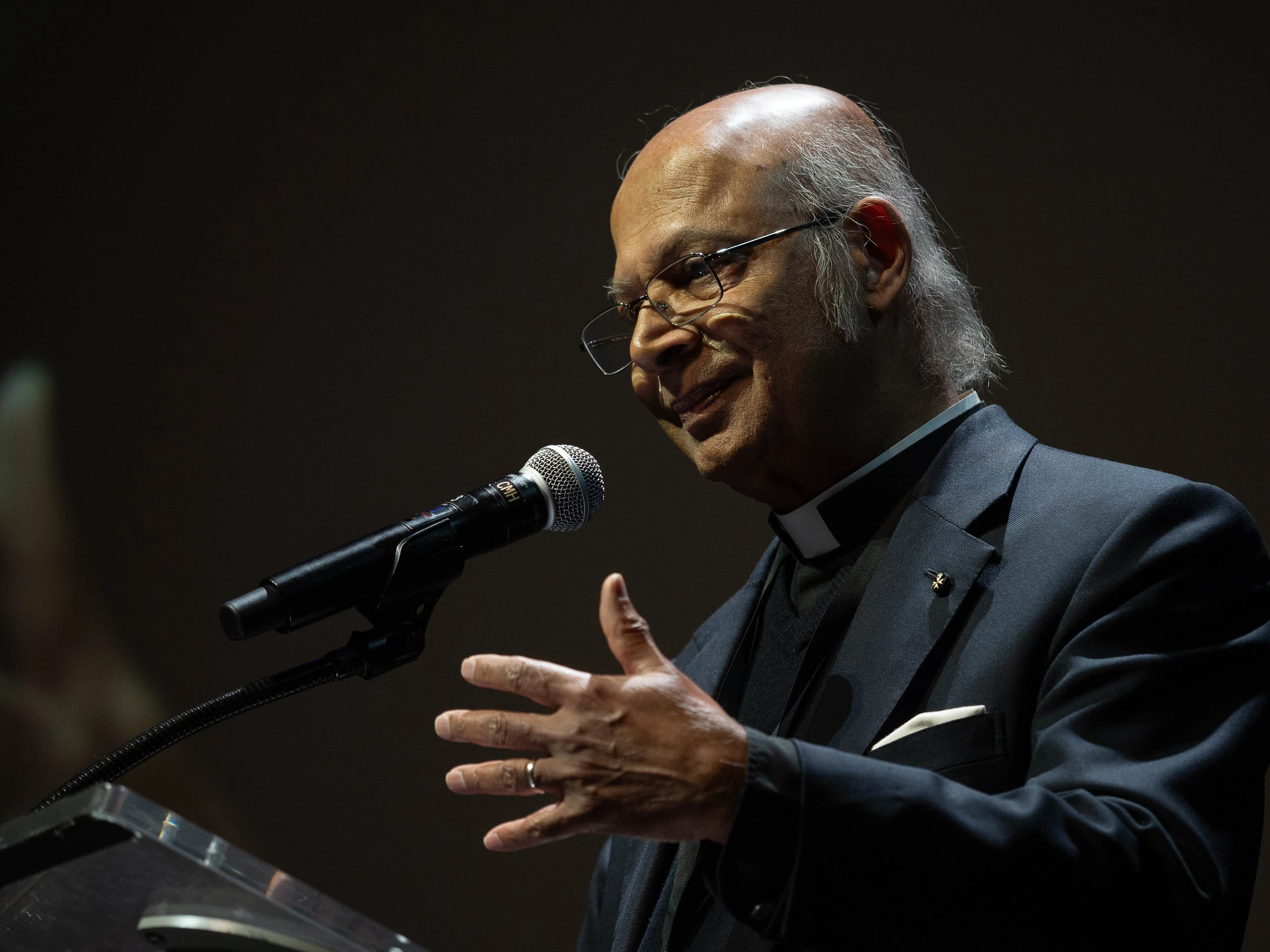
Monsignor Michael Nazir-Ali, who served as Bishop of Rochester in the Church of England but now, as a Roman Catholic, is Prelate of Honour of His Holiness to the Holy See, brought the focus to selflessness, service, and sacrifice. He pointed out that our bodies cannot be separated from ourselves just as our minds cannot (“I am in the wrong body” has no medical or scientific basis) and that we are made–one for another–with a common task: to make and nurture a family, which men and women fulfill in their own way.
Mary Eberstadt: “You are Not Your Own: Life, Liberty, and the Human Body”
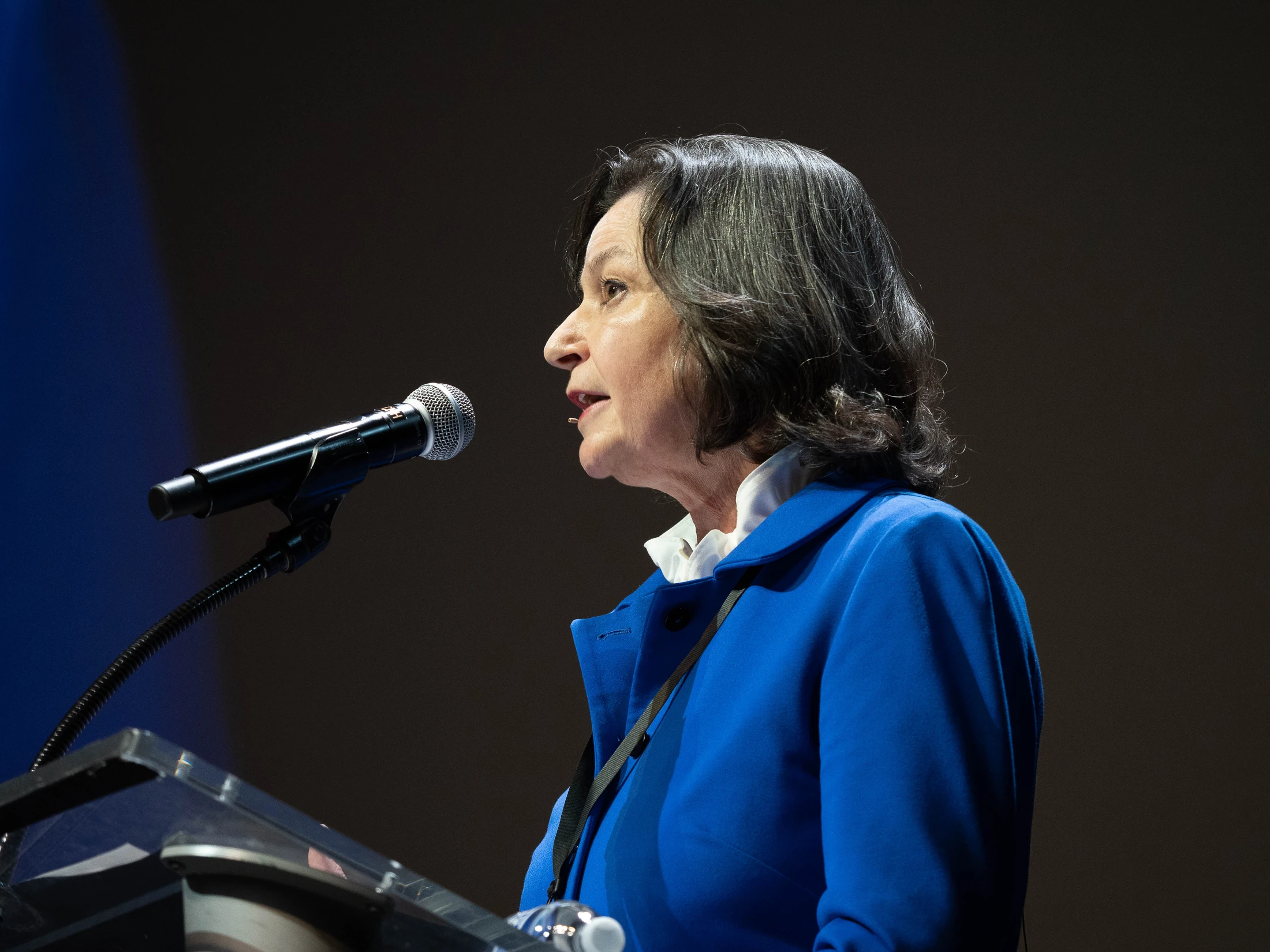
Mary Eberstadt, author of Adam and Eve After the Pill, furthered the focus on family by speaking on the aftermath of the sexual revolution and the birth control pill, when sex moved from procreation to recreation––and a matter not of morality but of arithmetic arose. “The revolution led to massive … increases in rates of abortion, fatherlessness, divorce, single parenthood,” said Eberstadt, “and, ironically, childlessness, while simultaneously shrinking the family in the great majority of American households.” This great subtraction has reduced the circle of given relationships and helped fuel a crisis of identity. She pointed out that yes, religious people tend to live in families, but also, living in families can make people more religious. “Faith and family are symbiotic, and where one is strong, the other will be, too.”
Justin Whitmel Earley: “You are Not Your Own: Friendship in a Fragmented World”
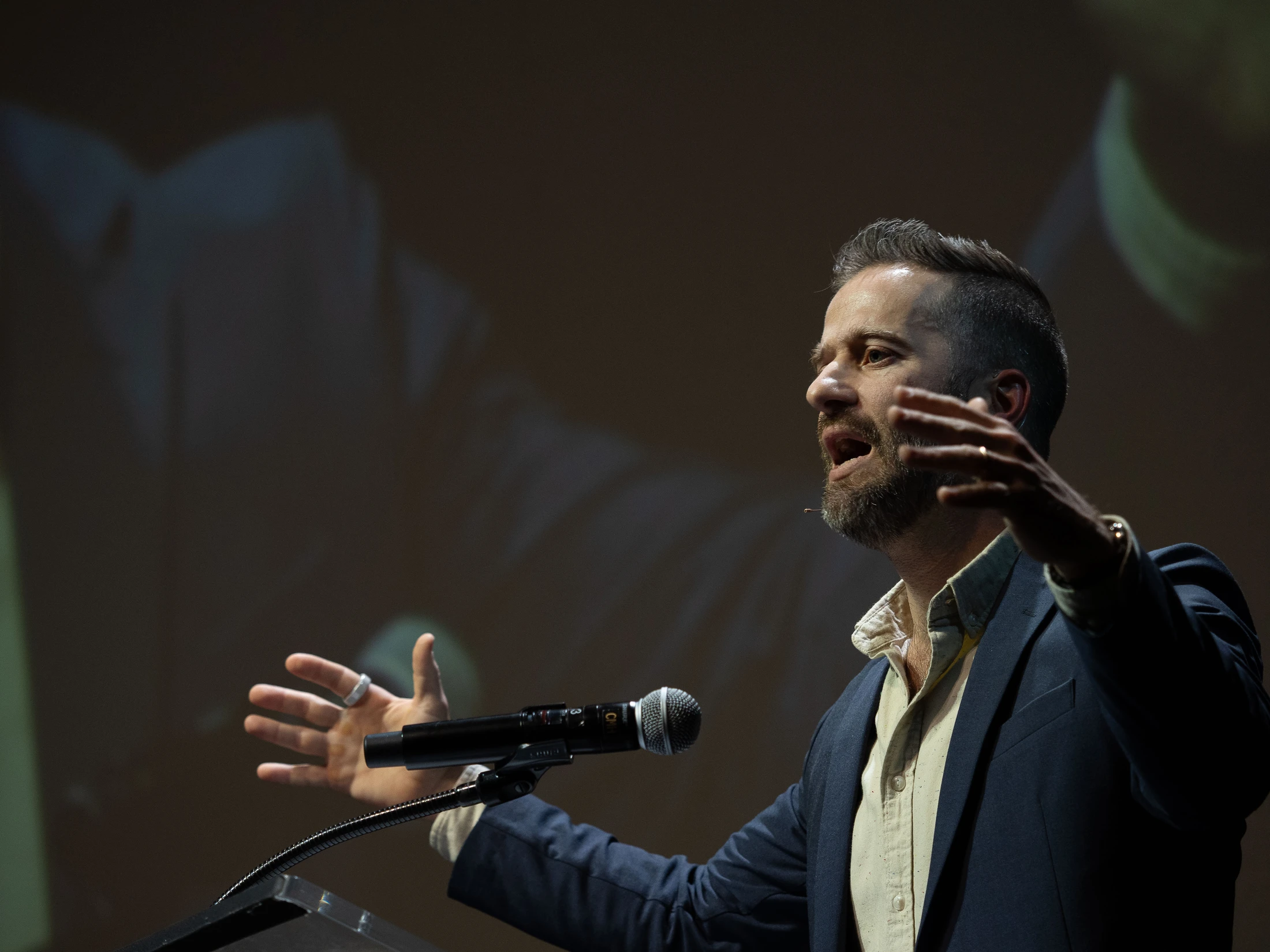
Justin Whitmel Earley, a former missionary and current business lawyer (and gym owner, a new bullet point on his résumé we learned about during his talk), is also the author of several books, including Made For People. Weaving the relationship thread into friendship, he brought the spotlight over to the loneliness epidemic. An alarming statistic he shared came from the 2023 surgeon general’s report: chronic loneliness can reduce life expectancy at the same rate as smoking 14-16 cigarettes a day. He used C.S. Lewis to illustrate the surprising nature of that fact, as Lewis once quipped that friendship is like art–it’s one of those things that has no survival value, but rather gives value to survival. “I really like disagreeing with C.S. Lewis because it gets people’s attention,” he said. Indeed it did!
The problem of loneliness is not one of reclusiveness, however. We are often restlessly wandering, “alone together”–on our phones even at the dinner table (if we gather there at all). This is the current we’re drifting along with. “You cannot become yourself by yourself,” he said. “You can’t. There’s something off when we are only inward and alone. You belong to God … But you also belong to others.” Earley pushed the importance of covenant friendship, of being vulnerable with other people, of making time for them. And the fire of friendship is contagious––when people see it, they want in.
Stephen Presley: “You are Not Your Own: Cultural Engagement as Citizens of Christ's Kingdom”
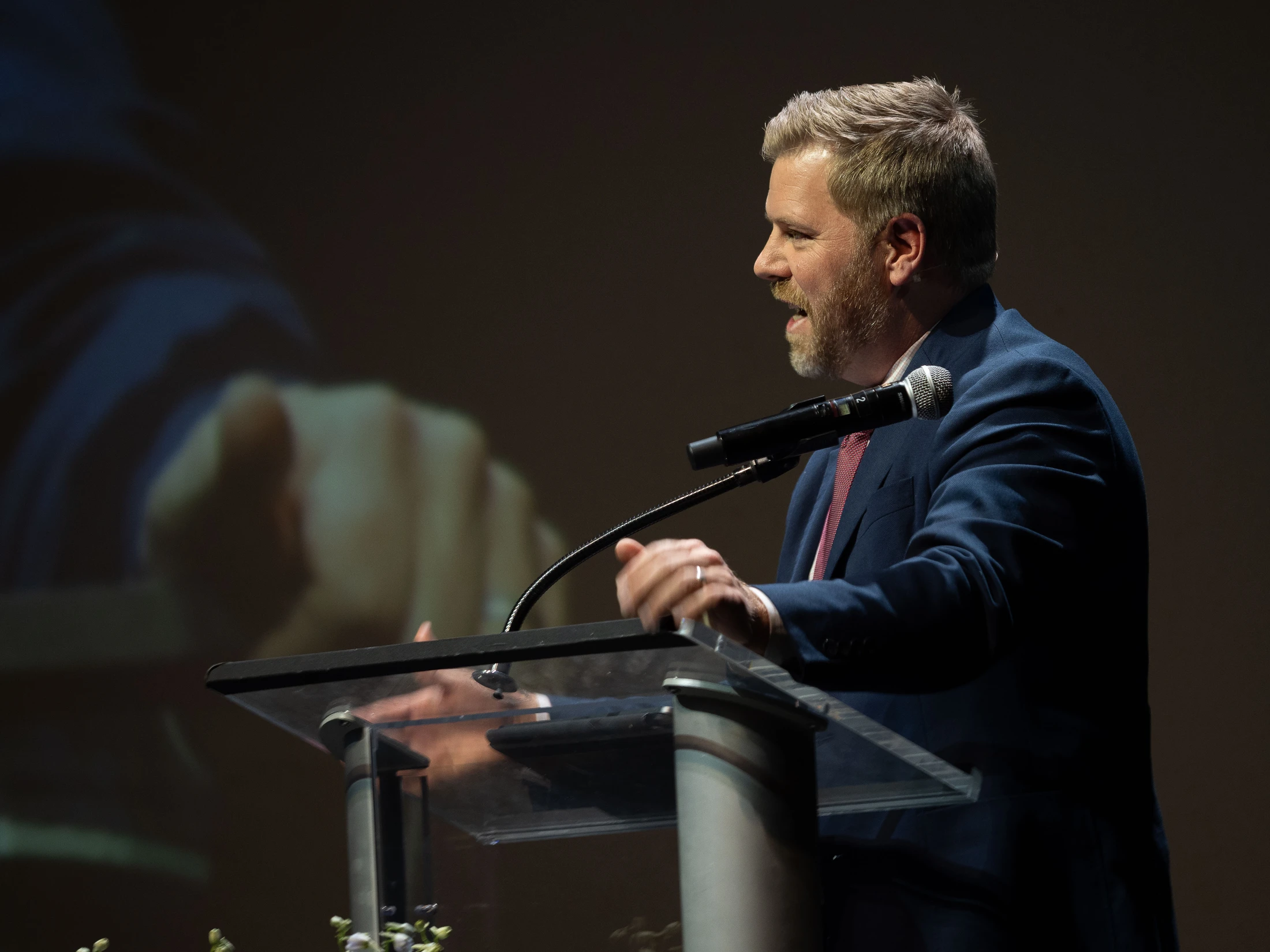
Stephen Presley, Associate Professor of Church History at the Southern Baptist Theological Seminary, broadened the perspective, speaking on engaging the world around us by reflecting the early church, particularly with catechesis and citizenship. Still, the focus is on community.
“We need a new or a renewed vision of what Christian citizenship looks like,” he said. “We are citizens of the city of God, embedded in the city of man, trying to figure out how to live … we need to give careful consideration to our public theology, building those thick communities.” His message was one of hope––not only because he is seeing a revival of classical thought popping up, including here in our diocese with the founding of St. Philip’s Academy, but also because we are free to love and serve and walk in confidence because Christ is coming again in glory to judge the living and the dead.
The Rev. Vaughan Roberts: “You are Not Your Own: The Church as the Soul of the World”
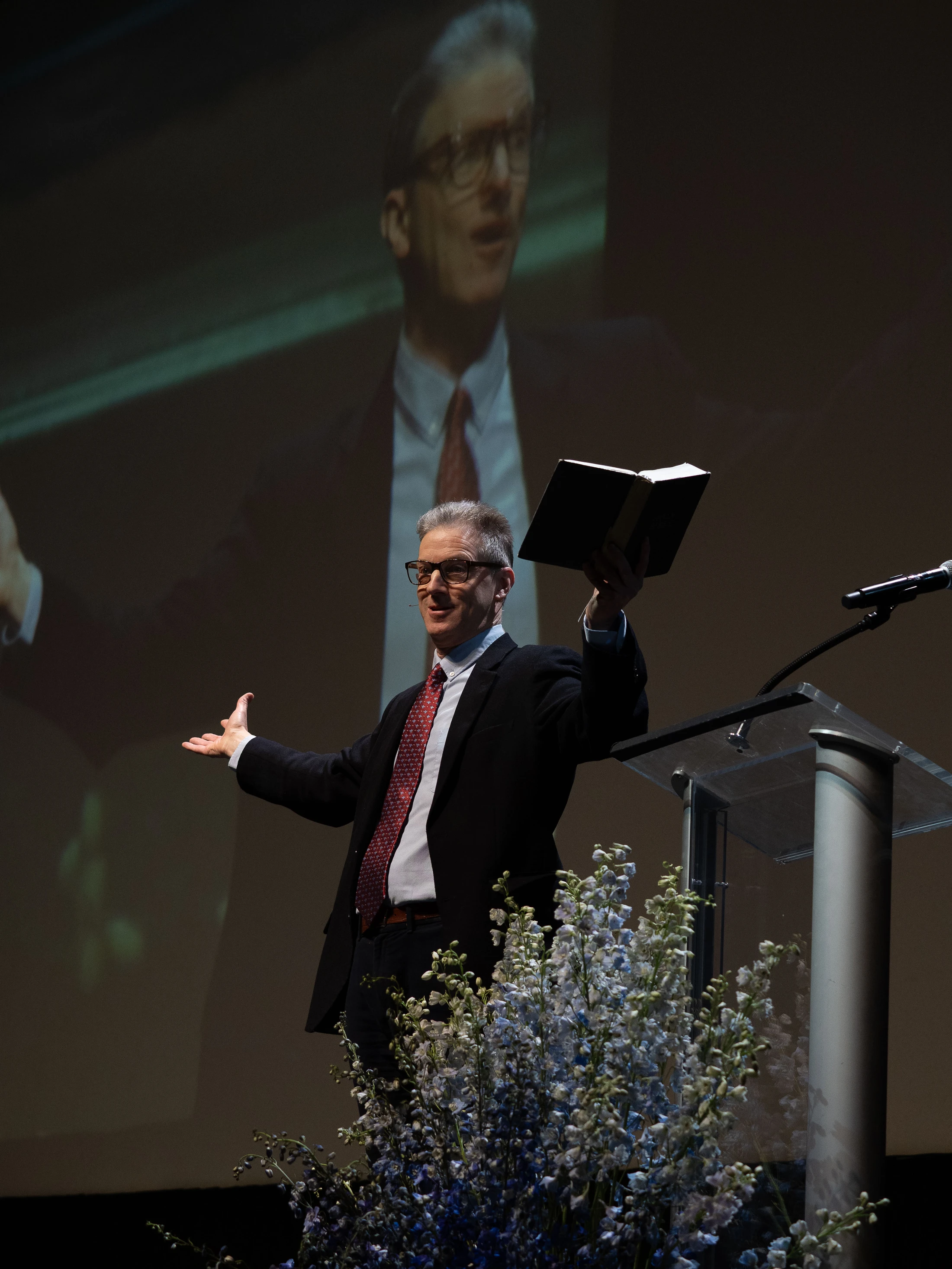
The Rev. Vaughan Roberts, Rector of St. Ebbe’s Oxford, delivered the final individual talk. As the Church, we have secure identity, a glorious destiny, an inclusive community, and a captivating purpose. This secure identity is the antithesis of the insecurity that lies behind the mask of “identity” in the secular society, those “loud, confident declarations” that we dare not question.
“We’re told, if you want to know your identity, just look within yourself, search for the hero inside yourself.” We’re told that if we look within, we’ll find freedom and fulfillment. “That’s a gospel message, but it’s a false gospel,” said Roberts. We’re seeing the effects of that false gospel in dehumanization and desoulment––but when the church is the soul of the world, we are humanized. In Christ, we are humanized. We need to preach a thick Gospel to combat the thin gospel that morphs into a false, therapeutic gospel: Jesus will make you feel good about yourself––you’re not going to get any challenge and you needn’t repent. Come as you are? Yes. But don’t stay as you are. “We’re called to live out the Gospel, to embody the Gospel, to build communities of love,” said Roberts.
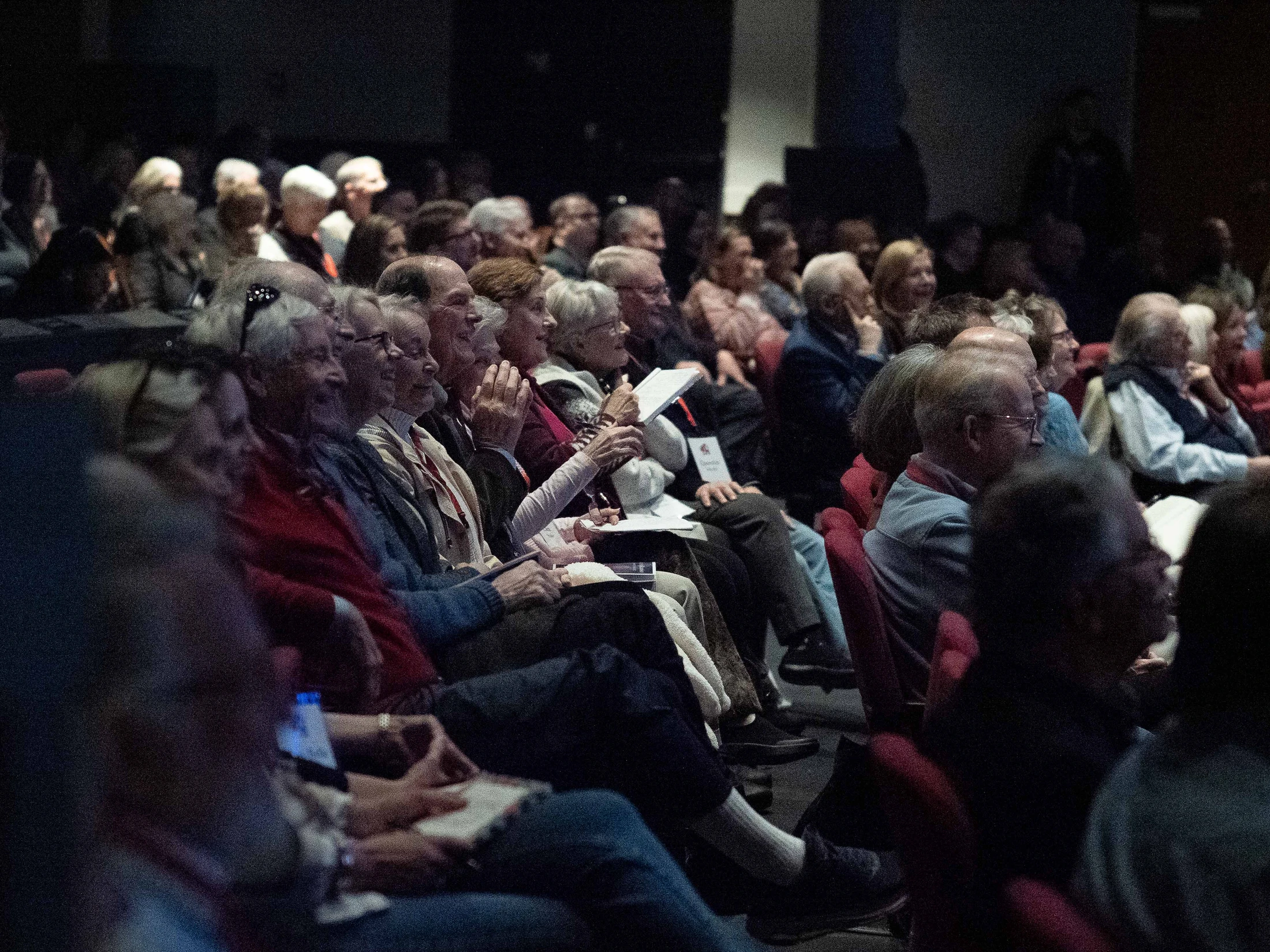
We are blessed to be a part of a diocese that prioritizes this thick Gospel and a community of love, and the Mere Anglicanism Conference exemplifies this spirit. How incredible and somewhat surreal it is every time to be a part of this gathering, to see members of our parish and diocesan family sitting elbow-to-elbow with people who’ve crossed the ocean, the country, or a few states to be with us, to understand how our society got here and where we need to go in our shared mission of bringing people to Christ.
Photographs by Joy Hunter, Anglican Diocese of South Carolina